A Formative Research to Develop a Risk Communication and Community Engagement Strategy, to Manage and Mitigate Climate-Induced Health Risks and Enhance Community Demand for Climate-Resilient Health Services
Formative Research to Develop a Risk Communication and Community Engagement Strategy, to Manage and Mitigate Climate-induced
Client: Save the Children in Laos (SCiL)
Location: Seven provinces across Lao PDR such as Phongsaly, Oudomxay, Luangprabang, Luangnamtha, Khammouan, Salavan, and Sekong.
Duration: May 2025 – Ongoing
Company Background:
Since 1987, Save the Children International (SCI) in Laos has been a trusted partner of the Government of Lao PDR (GoL), working collaboratively to influence policy and practice, and deliver high-impact programs in Health, Education, Child Protection, and Climate Resilience/Disaster Risk Reduction (DRR). SCI Laos leverages its strong community presence and long-standing partnerships with government agencies and local actors to drive systemic change and improve service delivery across sectors.
Services Provided:
ESL is conducting both of qualitative and quatitative methodologies on the Formative Research to generate evidence that will inform the development of an effective RCCE strategy under the project “Strengthening Climate Resilience of the Lao PDR Health System.” The study will support the achievement Outcome 4 of the project: “Communities respond to early warnings, manage and mitigate risk, and seek care appropriately.”
To understand how communities assess risk and prepare for climate-related changes and extreme weather events, and identify appropriate community platforms, structures, and channels for effective risk communication and early warning systems.
- Quantitative Survey:
- A household survey will be conducted using a structured interview guide. to quantify perceptions of climate-related health risks, early warning awareness, and access to information or services.
- Qualitative Survey:
- Key Informant Interviews (KIIs): Semi-structured interviews with local authorities (provincial and district officials), village health volunteers, community leaders, elderly will provide deeper insights into systemic challenges and interventions.
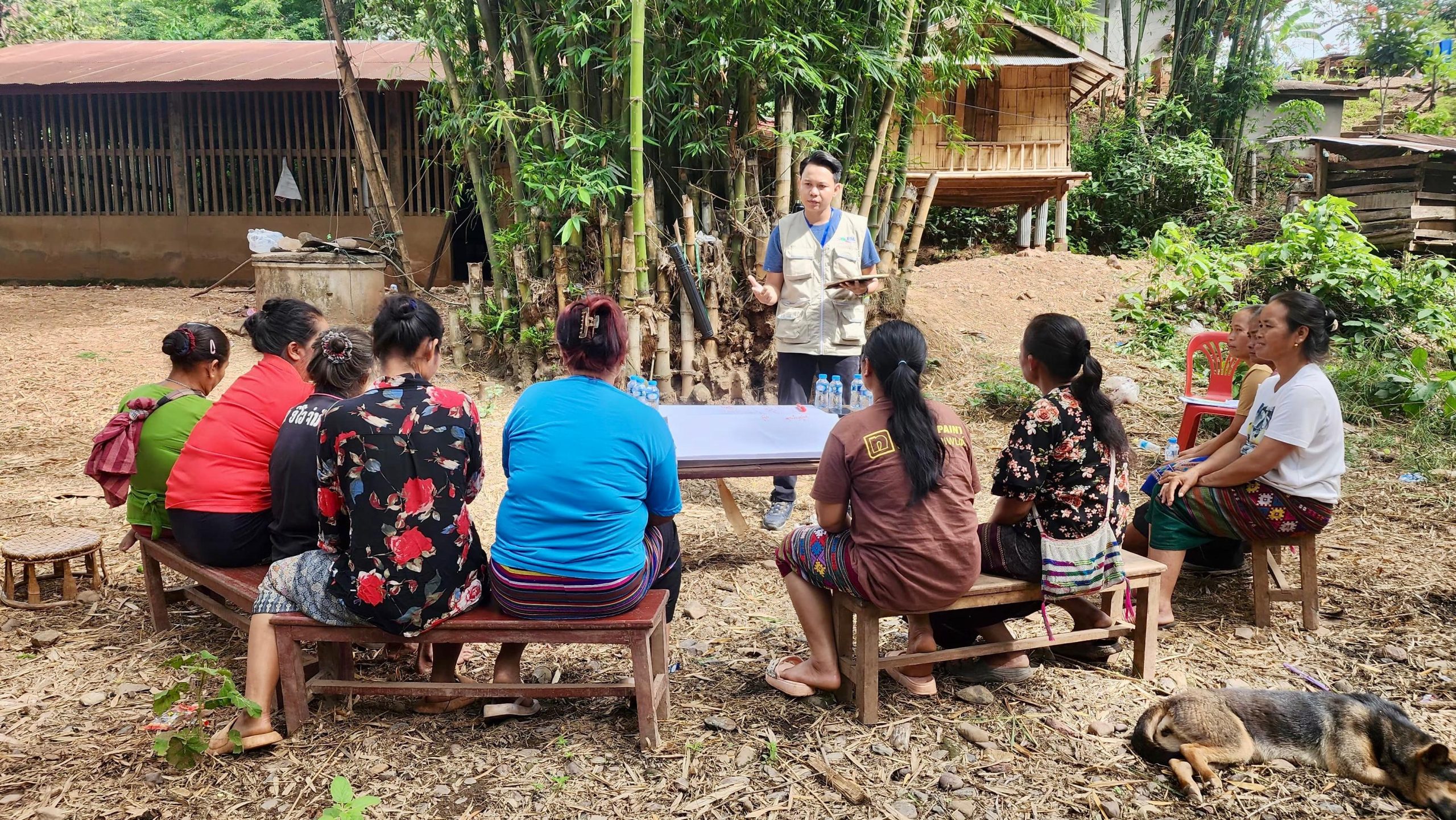
- Focus Group Discussions (FGDs): The study will employ FGDs to cover multiple research objectives. These FGDs will be organized into groups of people with similar characteristics to improve openness to discussion (men, women, youth). The different FGD categories will have different research questions to answer regarding climate-related health risks, early warning systems, and preventive measures. Some of the FGDs will use participatory research approaches – these can be found in the FGD discussion guides.